Share This!

Saturday, May 21, 2011

Soay Cute!

When I went to visit Amelia of the Bellwether, she shared some wonderful experiences with me, one of which was feeding her 3 Soay rams. These boys were sweet. And super cute. I just had to share the pictures I got of them.


The last one is Rigel, whose fleece I am sampling for my Sheep Study. Look at that face! Such a sweetheart. The lamb above didn't seem too interested in us. He was too busy bouncing all over the yard.

I tell you, I need to own sheep.

Saturday, May 14, 2011

4 Weeks Away

I haven't mentioned this on the blog, because I didn't want to arouse suspicion...But two weekends ago, I went to go test drive a new spinning wheel.

I had emailed The Bellwether (based here in Washington) to see if she had a wheel available for me to test. I had done lots of research and felt that the Bee was the best choice for me as far as ratios and versatility goes. This wheel is not to replace my Kiwi, but more to allow me to spin while on vacation and traveling. Sock Summit especially, since I have a few spinning classes that I signed up for.

The Spinolution Queen Bee

The Bee is manufactured here in the US by Spinolution, and I have been pleased to see that they are still making amazing things. (OMG, have you seen their Loom ideas?!?!)  The Queen Bee is a variation on the original Bee model, that had issues with the treadling mechanism being gouged by a screw (or so I've heard). The Queen Bee takes care of that issue while still preserving the 9 ratios, yes, NINE, from 1:5 to 1:36. For a girl coming from a Kiwi, with 2 ratios on the original orientation, this is a major evolution in spinning.  Alcariel, from Round the Twist has one and has been raving about it for about a year in her video blog, so clearly I am in good company. 

It's a folding wheel, with a clever little mechanism that allows you to lower the entire orifice and maiden mechanism into a rectangular shape that can fit inside a small suitcase. (12x19x9 inches in dimension, folded)

So I did first try spinning it on the lowest ratio, just because I had been in a car for 2.5 hours, and didn't wanna break it or myself. Amelia of the Bellwether was wonderful, and showed me all the ways it can change ratios and what I would be dealing with.  First off, the treadling is so smooth. It's an interesting orientation because there is a foot rest for your heels, and then the actual treadles are smaller bits that use a rocking motion (side to side, not front to back like the Kiwi)

The treadling is smooth, and the pegs (not hooks) are located on the same side of the flyer, which means I will have an easier time threading the singles in order to spin finer yarns (Cobweb Lace, here I come!!!!). On the Kiwi, the hooks are located on opposite sides of the flyer (and what I mean by this is that if you have the flyer flat, you will only see one set of hooks on top, and the other is on the bottom of the other arm of the flyer, whereas the Bee has pegs that face the same direction on both sides)

Yes, I did spin on the 36:1 ratio as well. And it didn't kill me, despite seeming like it was going 50 or 60 million miles per hour. :) I can see super fine yarns in my future with this wheel.

This was a sweet girl to spin on. I loved that Amelia broke out some really nice merino for me to spin, and she was a really wonderful person 

I am now halfway saved up to buy the wheel and a few extra bobbins.  Halfway. 2 more paychecks and I will be able to afford to buy my wheel in cash. How cool is that? And if I play my cards right (which I really do need to do) I will have this wheel before I leave for Sock Summit, and my 4 hour spinning class with Judith Mackenzie.  This is a big deal for me. 

Please, if you have the opportunity, you should buy from Amelia at the Bellwether. She is a wonderful resource and an amazingly knowledgable spinner, weaver, sheep farmer (I got to meet her 3 Soay Rams. :D ) and all around wonderful and sweet lady. She even gave me some Soay sheep fleece to play with for my Sheep Study. Isn't that wonderful? I highly recommend her for your fibery and Spinolution needs. 

And to be sure, I will be posting about this wheel once she is in my hot little hands.


Saturday, May 7, 2011

Sheep Study: Cotswold Spinning

After washing the samples I had received of the adult Cotswold fleece, I let them dry, then split them into two groups. One group was for combing on my English combs/dog combs and the other for carding.  I have already done the reading to know that with a staple length in the 5-8 inch range, combing is going to be the best bet. But I wanted to be semi-scientific about this and see what differences could be achieved with carding.


Combed Fiber:


When I first started processing this fiber, I had a pair of cheap dog slicker combs that I was using. They had one pitch of smooth (not deathly sharp) tines and were about 4.5 inches wide.  These are perfectly serviceable for those of us who do not wish to spend more than $100 dollars on combs specifically for wool processing.  These are also good for learning the proper method of combing without worrying about damage to the combs.

I combed the first sample of fiber, which was the sample that had not had added conditioner to the second rinse. The combing itself was fine, but the fiber while spinning was a little crisp. (This is when I decided to add conditioner to the second rinse, and also only use Dawn on two washings for the rest of the fleece that would not be used in sampling.)

Sample 1:

Sample 1 was washed 3 times with Dawn dish detergent, and rinsed twice.

I started on my Ashford Kiwi fast flyer with the 14:1 ratio for the singles s-twist and navajo plied z-twist on the 11:1 ratio. I ended up with about 15 yds at 14 wpi, which is close to a sport weight.

This sample was more overspun than I would have liked, with the twists per inch averaging about 15 tpi in the plied skein. The fiber itself was a little hairy, as if the fibers did not get completely spun into the singles, and were working their way out. The crispness of the fiber felt like it was more similar to wool in carpets. Smooth when you're walking on them, but a little rougher when just laying on the carpet.  I thought it might be because the sample had been washed so many times, or that my combing method was lacking, so I decided to do a few more samples.

Sample 2:
Sample 2 had been washed the same way that Sample 1 had been. It was washed 3 times with Dawn, and rinsed twice with no additional conditioning.

I combed it instead on my English combs (new acquired) to rule out the combs being the problem. Spun on my Ashford Kiwi with the 14:1 ratio s-twist for the singles, and then navajo plied z-twist on the 11:1 ratio.  I ended up with about 4.375 yards of sport weight yarn.

The resulting yarn was slightly less crisp than the previous sample, but still seemed overspun. The twists per inch was 12 tpi, so less than the previous sample, which I think contributed to the slightly nicer handle of the yarn.  Using the English combes appeared to make a difference, but to ensure it wasn't the main cause of the change in handle, I did another sample.  I wanted to show that the TPI is what really matters when spinning long fibers.

Sample 3:


Sample 3 was washed the same way the previous samples were washed, and was combed on my English combs.  I decided to test the "TPI matters" hypothesis by spinning at lower ratios and seeing what it did.

Sample 3 was spun on the Ashford Kiwi as well z-twist on the singles at 11:1 and s-twist on the navajo plied yarn at 11:1 as well. (A Note: Normally you do go down a ratio when plying to make sure you aren't taking out twist from one direction at the same rate you are adding twist in the other direction. I was unable to get a third ratio close enough from my wheel (the next ratio down would have been 7.5:1, and I felt that was too low. To compensate, I treadled slower in order to introduce less twist.) TPI in the resulting mini skein was 8-9 tpi.

The third sample turned out much silkier than the others, which I attribute to the twists per inch being lower as I progressed through the samples. Thank you, Thank you. I have just done an experiment that supports what most spinning teachers tell you about long wools. "Long wools need less twist to be held together". Scientific method has successfully given me a better understanding as to why this matters.

However, we still have not dealt with the idea of carding the fiber.

Carded Fiber:


Sample 4


I will not lie. Sample 4 turned out the best in my opinion. However, let's take a look at why.  I used the "waste" that was leftover from combing the locks for the previous samples and drum carded it, then pulled it into roving.

The roving itself was not as shiny as the top I had created, a result of the fibers not being aligned parallel, for sure.  It did however have a bit more bounce to it than the combed top.

Sample 4 was spun on my fast flyer for the singles s-twist at the 11:1 ratio, and navajo plied on the regular flyer z-twist at the 7.5 : 1 ratio. The finished yarn was about 10.69 yards, and varied a little between lace and fingering weight.  This was interesting to me because I had always assumed that more work would be involved with spinning thinner when using a lower ratio. Not with Cotswold. :)

The twists per inch was the most important part. I ended up with an average of 9 tpi on this yarn, which was the sample as Sample 3, but the yarn itself was more fluffy, due to the woolen spinning method.

A final note before the recap: All of these yarns were given a hot bath and then twacked to finish. I hadn't really wanted to try fulling to finish with these, and didn't imagine it would work to well, since Cotswold isn't known for felting capabilities.

The resulting yarns would be good for outerwear or a nice wool skirt. I don't think I would use my samples for a scarf, with the way the crispness set, but I could see trying it with a yearling or lamb's fleece to see if age makes a difference (and we know it usually does...) This could also be wonderful for blending with another softer long staple fiber, perhaps alpaca or llama? I don't have any alpaca to use, but that little bit of softness could make the yarn usable in more next-to-skin applications.

What We Have Learned:
1) If you want a shiny longwool prep, use combs.
2) Remember that you don't need much twist for longwools, so use a lower ratio.
3) TPI is king for longwools. Pay attention to that in order to get the yarn you want.
4) If you spin woolen, using carded fiber, remember it won't be as shiny as its combed counterpart, but it will be fluffier due to the introduced air.
5) Spinning samples is important if you want to learn what your specific fiber has to offer. Your patience will be rewarded.

Saturday, April 23, 2011

Sheep Study: Cotswold The Washing

Next in our study is the Cotswold sheep.

History:
The Cotswold sheep is a longwool that is thought to be one of the oldest known sheep breeds.  It has historical roots around the areas of Gloucestershire and Oxfordshire in England. Some authorities claim that the sheep were present even before the Romans in 54 BCE, being brought in by the Phoenicians in the earlier 100 BCE years. The locks themselves are often sold as "Santa's Beard" hair, for use in dolls.  Cotswold sheep are normally polled and have white faces and black hooves. The wool can be tan, grey, or white, with white being (sadly, in my opinion) the most sought after for those "Santa Beards".

From the Books:
Staple Length: 7-12 inches
Micron Count: 34-40 microns
Luster: high luster, silky
Felting: modest felting qualities (although my shepherd said that if you even *look* at some of the locks funny, they will felt...)

My Experience:
I received two types of samples, both white and the natural grey/tan.  Both were lustrous and long fibers, which displayed themselves in perfectly curled ringlets when first pulled out of the box.

The White:


In its raw state, my white sample weight 3 1/4 ounces.  Some of the tips were felted, but otherwise, the fiber was free flowing.  The white samples came from sheep named Dinah, Glinda, and Nibbles, and there was a little bit of hay and vegetable matter in the locks.

Staple length: short-6.5 inches, long-7.5 inches
Crimp: 4-5 crimps per inch
Fineness: soft, almost like a silky hair, not as soft as optim Merino, but as soft as regular Merino, and less coarse than the cheviot I had been working with.

Prewash Weight: 3 1/4 ounces, out of bag
Washing: 3 washes, 2 rinses (with no additives)
Postwash Weight: 2 1/5 ounces, out of bag

When we do the math for the percentage change,
                                                      F2-F1
                                                  --------------  x 100  =  percentage change
                                                         F1

               We get:
                                          2.2-3.25
                                     --------------  x 100 = -.32   or 32% Loss
                                             3.25
The Gray:


The gray locks were slightly more silvery in color than a true gray. This is one of the natural colors that Cotswold can be, (other colors are fawn, darker brown, dark grey to almost black, or a tan color) and I have to say, with the luster that is inherent in the breed, these locks were *shiny*

Staple Length:  4.5 inches on the short end, and 8.25 inches on the longest end.
Crimp: 6 crimps per inch
Feel: This was softer than the white, but also had more crimps per inch. I am thinking that the darker locks will require a little less spin than other samples, because of the higher crimp ratio.

Prewash Weight: 3 ounces
Washing: 2 wash, 2 rinse (last rinse with conditioner)
Postwash Weight: 2 ounces

Percentage Change: 33% loss


The reason why I had added conditioner to the last rinse of the gray Cotswold locks was because I had already completed spinning a sample of the white, and felt that it was a bit coarse. In order to rule out my washings as the culprit, I washed these samples with conditioner. When I do the spinning samples, we will uncover whether washing or spinning was the cause of the coarseness of a previous squishy fiber (another post, to be sure. Stay tuned for Sheep Study: Cotswold Spinning)

What we have learned:

When washing raw Cotswold locks, we can expect between a 32-35% loss in weight. There wasn't much lanolin in the raw locks that I washed, so I expect future numbers to be around the 35% end of the spectrum.  Of course, lanolin production varies with the season and the conditions that the sheep are in. No two fleeces are really the same, regardless if they are raised on the same farm. And also, these sheep were not raised without pasture or with coats. There was vegetable matter in all the locks. The good thing is that my shepherd knows the value of handspinning, and was sure to be careful to not throw hay on her sheeps' backs, but still. Vegetable matter is unavoidable in most cases. However, most of it will come out during further processing.

Up next in this Sheep Study: Combing versus Carding, Processing Locks for Spinning

Thursday, April 14, 2011

Product Review: Anderson Originals Kitten Drum Carder

As you may recall from my previous post, The Great Drumcarder Decision 2011, I bough a drum carder. Now that I've had the chance to play with it, I decided to do a product review. You all know by now, my reasons for choosing this drum carder over other brands and models. But here we will talk about the drum carder itself.


It all came in a HUGE box, with a friendly sticker that says "Made in the USA". Yes, I feel good about this purchase, because it was *relatively* inexpensive, and I am supporting a handmade production artist. Now the box is slightly deceiving. The drum carder is not that big (nope, no 3 ft by 3 ft carder...) but the reason for the box being that size was for the care that was put into packing it.

LOTS of bubble wrap!
Not only was the drum carder wrapped in 2 feet worth of bubble wrap, but it was also housed by foam corners to prevent it from moving during travel. Please keep in mind that the care put into packing the drum carder is part of the shipping cost (and seriously, if I made something this sexy by hand, you BET I would be packing it with care as well!)
 The box itself came with a *hand written* thank you card from the master himself. Now that is sweet.


The carder itself has a 90 tpi licker in and 120 tpi drum. What I love is that this is suitable for most wools that I would be playing with, but there is also the option to buy additional drums separately with the other carding cloths. Versatility is goooooood.

The packer brush has a hand burned Anderson Originals stamp on it. Remember: attention to detail. The brush itself has bristles that are about 3/4 inch long. Enough to brush along the tines, but not long enough to remove fiber from the drum as you turn.


My Fancy Kitty Kitten is about 1.5 feet long, and 3/4 ft wide. Small enough to fit easily on my kitchen table, but big enough to make batts that are 22" long and 8.5" wide.

The table clamp is relatively simple, it's just a screw and a nut that bolts the drum carder to the table. If I had my way, this is the only thing I would change, as my table is a little too thick to properly clamp the drum carder to, I would prefer that there be more than one clamp.  But honestly, the craftsmanship might not allow this. I can get by with one clamp. I just need to be creative with how the drum carder is attached.


The Kitten comes *almost* fully assembled to your door. All you need to do is attach the handle that turns the machine. Sweet. Minimal assembly is a plus when you are squeeing your way through the house in anticipation of a new toy to play with.


The poly cord drive belt is serious business. It's thick and seems like it will never wear out. It is completely smooth, so there are no bumps when you are carding to your little heart's content. The fun part is, that if it does wear out, it is super simple to replace.

Just an aside: Do you see how shiny this baby is? Even without a finish, you can tell that love and knowledgable craftsmanship went into it. Everything moves super smooth, and there are no rough patches.

She's so pretty!

I am extremely happy with my purchase. I have already carded some targhee and cheviot batts on her, and am very please with the results (those are available in my etsy shop...)

Again, the only thing I have a vague problem with is that I am worried my little darling will migrate across the table with only one clamp. But, it hasn't happened yet.

Thursday, April 7, 2011

Sheep Study: Targhee-Washing and Analysis

About a week ago, I decided that I needed to visit my LYS and play with fiber. I've been working with some farmers across the nation, trying to find a mutually beneficial way for us to work together to bring you all interesting and/or rare fibers.  It's looking like the best way to do this is for me to buy raw fleeces and then do most of the processing myself.

Before taking a huge plunge and buying several hundred pounds of fleeces, I decided it would behoove me to start small and figure out what I'm really getting into. My first study is of a Targhee ram fleece that I picked up from my LYS. What follows is my experience with the fiber.

(As an aside, if you are interested in doing something like this on a smaller scale, please check out the Fleece Study with Jacqueline Bland. She sends you samples of all kinds of sheep breeds (about 40 of them), and a handy book with information on each of the breeds, as well as space to take notes, and for $70, it is well worth the investment)

Targhee:
raw state Targhee locks
I started with 12 oz of fleece from a Targhee ram that I bought from my LYS. When I was picking through the bag of fleece, I was looking for fiber that was still in its original lock formation, and I looked at the cut end, trying to find pieces of fleece that had similar crimp structure. When choosing a part of a fleece, it is best to look for whole locks, because then you can ensure you do not choose portions with lots of second cuts (those little bits of fiber that are caused by cutting back across a portion of the sheep's body. Mostly unavoidable as a sheerer, but best to be avoided as a spinner. Although, they are handy for pillow stuffing or small felting projects...)

I have a notebook that is now dedicated only to this long term Sheep Study. In this notebook, I wrote down the raw weight of the fiber, which for the Targhee was 12 ounces (it weighed 12.5 ounces inside its original bag)

I then spread it out on the table and started looking through for any big pieces of vegetable matter (hay, grass, etc) and any second cuts.  You will want to pick these out if possible. No sense in washing bits of hay.

Look at the raw locks. Even though they are unwashed, the cut end is still a gloriously bright white. Also, you will want to make note of how much lanolin there is. In my case, this appeared to be a very happy sheep, with lots of lanolin. My hands were even soft after handling it.

Pick out a lock and grab a tape measure. You will want to measure the longest and shortest locks of your collection now. This will give you a better idea of how you may want to process the fiber after it's been washed (ie: combing, carding, or spinning from the lock)

staple length
In this case, the average staple length of this boy was around 3.5 inches. In my reading (research, research,research!) I found that this was about average and true to breed. (Following the post there will be a list of additional sources for breed-specific information for you.)

You will definitely want to do some reading before you wash the fleece, because researching the feltability of your fiber is a good thing to do BEFORE you think about putting your locks in water. In addition to that, you will want to know what to expect as you process your fleece.

 Now take a look at the crimp structure of your lock. With your handy dandy tape measure, you can determine the number of crimps per inch.  A note: when you are counting crimps, you are essentially counting the bends in the fiber. Embiggen the above photo, and you will see all the little bends. When counting crimp, you will only count top or bottom bends (much like a wave, with a crest OR a trough.) NOT BOTH. I decided it was easier to count the top bend or crest of the wave.

The number of crimps per inch for my lock was around 14.  In this case, my chosen lock was again, average for the breed.

Here is the run down of Targhee characteristics:
Staple Length: 3-5 inches
Fineness: 21-25 microns
Bradford Count: 58s-64s
Crimp: fine, between 6-15 crimps per inch
Fleece Weight: 11-16 lbs 
Labeled as suitable for next to skin wear

Now then, because the fiber is so fine, and there are lots of crimps per inch, this is also a highly feltable wool. Care must be taken while washing and processing it. For this reason, I decided to do all the processing by hand. No machine washing or agitation.

Arrange the locks
To wash the fleece, I arranged the locks with tips facing each other, and put it into a lingerie laundry bag. I ran the hottest water that my tap could do, and grabbed a wash tub. In said wash tub went several tablespoons of Green Works dish detergent (personal choice, I like to pretend that my fleece washing isn't poisoning the water table). You can use shampoo, Dawn dish liquid, anything that is labeled to cut grease. Remember, you are trying to remove the lanolin and dirt.

Bath Time!
Make sure the water feels "slippery" before the locks are introduced (taking a page from Margaret Stove's book here from her video "Spinning For Lace")

Once your wash tub or sink is filled with at least 5 inches of water (give or take) and is super sudsy, you can lay your laundry bag on top. Gently push it down into the water, being careful to not agitate the locks.
Rinse it good

You will do the sudsy water thing several times when washing fleece or locks. In my case, it took three sudsy baths to get the dirt and lanolin out.

Then you rinse with water of a similar temperature. It took my locks two rinses.


After washing, you will want to carefully lay the locks onto a drying rack, making sure to preserve the lock formation. At this time I want you to understand that as a dyer and processor of fleeces, the best addition to my equipment has been the Hamilton Beach Quick Dry drying rack. It dried the locks in one day instead of 4. At any rate, a drying rack with air circulation is fine. Use an air filter if you want to lay them out. Anything works.

Now weight the dry locks again. In my case, I got the washed fleece state as being 8.375 ounces

Once it's dry, you will probably want to know what the weight loss was from washing it (so that you know how much raw fleece you need to buy in order to end up with X amount for spinning). Break out your calculator. (I promise this won't hurt).  Do you remember from school, the formula to calculate the percentage change?

                         F- F1                                                F1= fleece weight, unwashed
                                ----------------                                               F2=fleece weight, washed
                             F1

For this batch, we would plug in the numbers thusly:

                      8.375-12.5
                  ----------------  =      .33 or 33%
                           12.5

This means that the percentage loss from washing was 33%. Not bad, considering there are some breeds that can lose up to 50% of their weight from washing.

You will notice that I used 12.5 as my starting weight. I weighed the locks inside a plastic bag, and then used the same plastic bag to contain the washed locks for weighing. The bag alone weighs .5 ounces, so I took that into account for my final numbers, and since I had weighed both the washed and unwashed locks inside the bag, I decided to use those numbers. The math works out the same whether you take the measurements inside or without a bag, so I did the easier math

Summary:


Here's we've learned from this particular batch of fiber:
Targhee
Staple Length: 3.5 inches
Crimp: 14 crimps/inch
Highly Feltable
Raw Weight: 12 ounces
Washed Weight: 8.875 or 8 7/8 ounces
Loss from Washing: 33%
Washing: 3 washes
Rinsing: 2 rinses, no conditioner necessary

Further Reading:
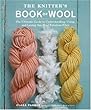
   The Knitter's Book Of Wool by Clara Parkes
Fleece Study with Jacqueline Bland notebook

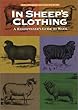
 In Sheep's Clothing: A Handspinners Guide to Wool by Nola and Jane Fournier


Also, a lot of really good information can be found both by taking a look around The Joy of Handspinning and also by contacting sheep farmers directly. Most of them are excited to talk about their flocks and give you good amounts of information. (in this case, the farmer told me that dyeing the Targhee locks directly instead dyeing it after it has been carded into roving will yield better color results. I will be trying that next)

I will be testing samples for spinning using both carded and combed preparations. Stay tuned for another Sheep Study update!

I hope this has been helpful. How do you analyze your fleeces? I'll talk to you in the comments.

Next up in the Sheep Study: Cotswold-Washing and Analysis!


Sunday, March 27, 2011

The Great Drum Carder Decision 2011

As a few of you are aware, if you follow me on Twitter or Plurk, I pulled the trigger and bought a drum carder. Being that this is a beginning business, making the decision to invest roughly $400 on a piece of equipment was a big step, especially since I am still personally funding my venture.

I will tell you which one I bought, but I thought that you might want to understand what made me choose the one I did. I did only look at the drum carders that were hand crank models, but made note of which had the option to add a motor. I list the pros and (not really) cons of each. I list them as "not really cons" because these aren't things that make or break the product. It's just something to be aware of.

Strauch Petite Drum Carder

First I looked at the Strauch Petite drum carder. It's a cute little machine, and it is a hand crank model in the high $400 range.

Pros:                                                                                    
-comes with a packer brush included in price                         
-is equipped with the 128 tpi carding cloth                             
-batts produced are 6.5" by 22"                                          
-4:1 ratio                                                                            
-comes with the Knuckle Saving Batt Pick
to protect your knuckles from the pointy
-free shipping

 (Not Really) Cons:
 -only comes with the 128 tpi carding cloth
-batts are slightly smaller than other models
 -no option for a motorized attachment
 -light duty machine, not for production

I liked the idea of a knuckle saving batt pick, because the last thing I need to do is destroy my knuckles when trying to remove a carded batt from the drums, but was a little sad that there was only the finer carding cloth available. It's a good machine, and has received good reviews.  But you will need to be aware that it might not be able to handle major batt production.

Louet Drum Carder
I looked at both the Classic drum carder and the Standard drum carder.  The Classic has been around for the past 20 years, which means they have definitely honed its abilities. The only real differences I saw between the Classic and the Standard was the ratios (9:1 for the Classic, 12:1 for the Standard) and the carding cloth option. The Classic has 46 tpi, and the Standard comes with the 72 tpi carding cloth. 

Pros:                                                                             
-enclosed gear box to prevent fibers from getting in          
-faster than the louet, as far as ratios go                            
-drum size allows thicker batts                                         
-no belts to wear out
-two table clamps
-makes 2 oz batts (60g)

(Not Really) Cons:
-only one option of carding cloth per carder
-slightly smaller batt size 19" by 4" versus Strauch
-higher price tag ($590)

These appear to be good quality, and if you have ever worked with fiber before, you KNOW that fiber likes to get into interesting places, so the enclosed gear box is a great idea.  The price was a little too high for me, but it is for a known company that has been in the fiber industry for a very long time.

The next one I looked at was the Ashford drum carder. I actually own an Ashford Kiwi spinning wheel, so you might think that I am slightly biased. But read on.

Pros:                                                                                
-adjustable drums to accomodate all fibers                         
-rubber feet to prevent slipping                                          
-makes 65g (2.25 oz) batts
-larger batt size 24" by 8"
-two options for tpi 72 or 36
-optional packer brush

(Not really) Cons:
-no table clamp
-$470 (cheaper than the previous two)

I really loved the idea that the batts were larger, and that the drums were adjustable. This is a good idea. The price tag was slightly lower than either the Louet or the Strauch.  All good things. My biggest issue is that it didn't have a table clamp, since I've seen drum carders try to migrate across the table, and I'm not sure how effective the rubber feet would be.  Still, it's a good option if you plan on carding different fibers, since you can adjust the space between the drums.

Now we come to the last of the drum carders that I looked at.


This is the last one that I looked at. These are made by Anderson Originals, which is pretty much one guy with a lathe who hand turns these.  Getting past the pretty decorations on the sides of the Fancy Kitty, I only looked at the Kitten drum carders.

Pros:                                                                                   
-rubber feet AND a table clamp                                           
-option for motorization                                                        
-batt size 8.5" by 22"
-optional packer brush
-3 options for drum tpi, 90, 120 or 190
-you can buy optional drums to get the other tpi's
-14 day satisfaction guarantee
-price between $359 and $389

(Not really) Cons:
-smaller batts than the Ashford
-come unfinished, but option for Tung oil

Okay. I'm totally in love with this one. I admit it. Not only do you have the option to change out your drums to accomodate different fibers, but there is also a motor option. It does make slightly shorter batts than the Ashford, but only by about 2 inches. 

These are hand made. I feel like, in my industry, supporting a one man show is more important than just buying one from any old company. There is a small con that there is a shipping charge, as opposed to the other companies that offered free shipping, but it's only $19.95 for shipping. And the price for the actual machine is easily $100 less than the others.

I did end up buying a Kitten. My specs are as follows:

-licker in 90 tpi, drum 120 tpi
-added on packer brush option
-no motor....yet
-unfinished (but I have wax and can easily do that myself)
-hand crafted

I feel really good about this purchase. Not only am I supporting another hand crafter, but I also get my expandability options as far as drums go. You never know if I would start carding super super fine fibers or super coarse ones. I like the idea of expandability and options.

Here are some more beauty shots. :)


I hope this run down gives you an idea of what to look for if you are considering a drum carder. Regardless of price, this is a big investment for any fiber artist, and it's nice to do your research. And don't just take my word for it. Each of these companies has a Ravelry group where you can go and ask questions. Don't hesitate to ask!

What drum carder do you own? Have you just started looking at them? I'd love to hear what you have to say! 

I will talk to you in the comments!